ThingsBook
- 4.2
- Rating
- 100.00K
- Installs
- Free
- Price

 Analysis by App-foxy
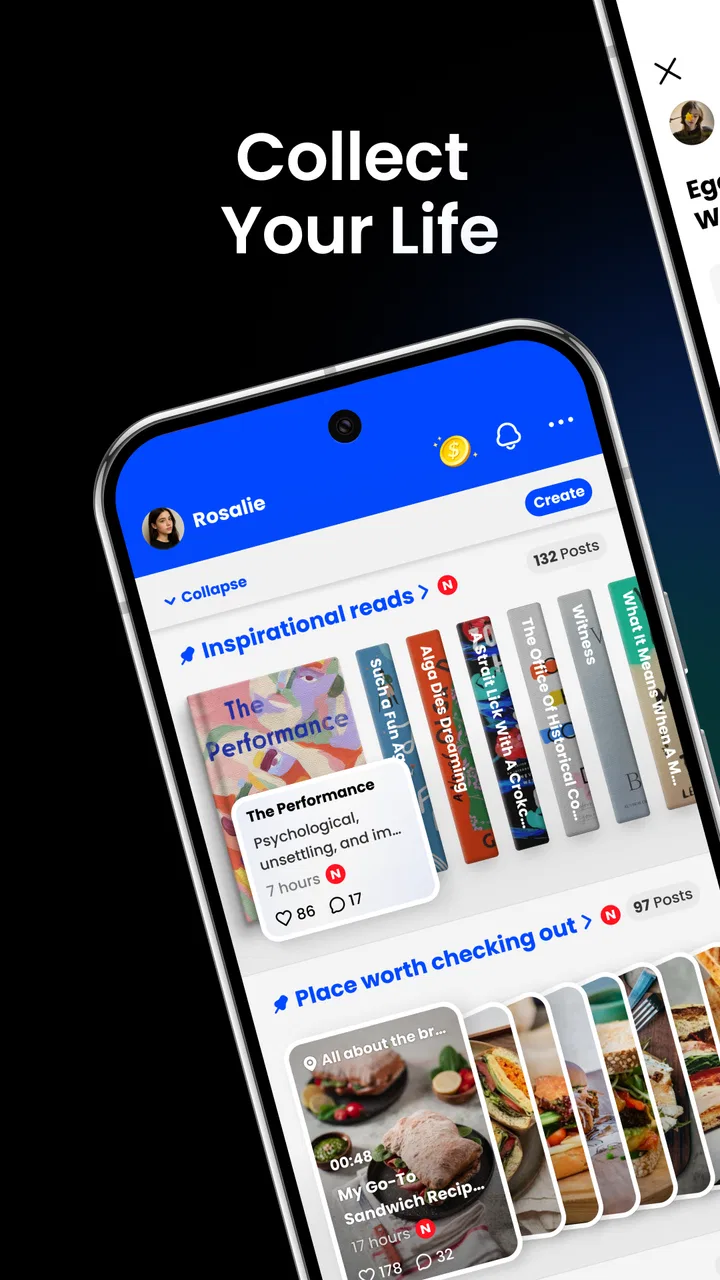
I found ThingsBook most interesting when I stopped treating it like another social feed and started using it as a quiet place for personal records. Its purpose is simple: you write things down, collect them, and keep them together instead of scattering notes, photos, and memories across several apps. That makes it especially worth considering in a household where a phone or tablet may pass between people, although the value depends heavily on keeping each person’s account and writing space separate.
Developed by ThingsBook Studio, this free social app takes a more personal approach than the usual conversation-first platforms. The current release is version 1.0.7, and it runs on devices using OS 10 or later. It is marked for Teen users, has reached over 50 thousand installs, and holds a 3.5 average from around 142 ratings. Those figures suggest a young product with a real audience, but also one that is still finding its shape.
Using it as a shared household memory space
My favorite household use for an app like this is not constant group chatting. It is the slower collection of useful or meaningful fragments: a child’s drawing, a recipe someone wants to repeat, a short account of a weekend, a list of ideas for a room, or a personal journal entry that should not disappear into a messaging thread. ThingsBook’s appeal is that these items can be treated as part of an ongoing personal archive rather than temporary messages.
You May Also Like

 AccuWeather: Weather Radar
AccuWeather Review: A Quick, Clear Forecast for Everyday Decisions
For everyday plans, the best forecast is the one you can understand quickly. AccuWeather makes rain timing, radar, and local conditions easy to act on, with a few trade-offs.

 Hill Climb Racing
Why Hill Climb Racing Still Turns Crashes Into One More Run
A tiny car, a bumpy hill and one more upgrade: Hill Climb Racing keeps resurfacing because its simple chaos makes every near-miss feel personal.

 AliExpress - Shopping App
AliExpress Makes Global Shopping Feel Personal, but Shoppers Bear the Risk
AliExpress turns a global marketplace into a pocket-sized discovery engine. Its reach is useful, its shopping loop compelling, and its trade-offs easy to miss.

 Lords Mobile: Kingdom Wars
Lords Mobile Is a Kingdom-Building Routine, Not a Quick Match
A case-by-case verdict on the building, battles, device demands, and social commitments that make Lords Mobile rewarding for some players and exhausting for others.

 PDF Scanner app - TapScanner
TapScanner Makes Paperwork Easier to Capture, Check, and Share
TapScanner makes scanning with a phone feel less like a rescue operation and more like a dependable step in getting work done. Its capture tools are useful, though not flawless.

 Block Blast!
 Shows How Much a Puzzle Game Can Leave Out
A quiet grid game shows why puzzle players increasingly value instant clarity, repeatable skill and low-pressure play—and where the genre still needs to catch up.
More From Our News Desk
View All News


Imagine a shared tablet in the kitchen. One person could open the app to write down a meal that worked well, another could collect decorating ideas, and a teenager could keep a private-looking personal space for reflections or creative writing. The important distinction is that these are different uses, not necessarily one communal account. I would not put everyone’s material into a single profile unless every person was comfortable with everyone else seeing it.
That boundary matters because the app’s central idea is personal ownership of memories and notes. A household can coordinate around it, but it should not be mistaken for a family dashboard, a chore manager, or a guaranteed shared archive. If your main goal is assigning tasks, tracking appointments, or maintaining one live shopping list, a dedicated household organizer will usually be more direct.
For shared-device use, I would establish a simple routine before adding anything sensitive. Each person should know whose space is open, avoid leaving an account unattended, and close the app when handing the device over. Those are ordinary habits rather than special ThingsBook tools, but they make a large difference when several people use the same screen.
Why the personal format works better than a normal feed
Most social apps reward speed. You post, people react, and the item quickly moves down a stream. ThingsBook feels better suited to material that deserves to remain findable. I can imagine opening it later to revisit an idea, compare how a project developed, or read an older entry without competing with an endless sequence of unrelated updates.
That slower rhythm is a genuine strength for households. A parent may want a place to gather small memories without turning them into public announcements. A student may prefer collecting thoughts without the pressure of immediate reactions. A couple might use separate personal spaces and occasionally share selected material in conversation rather than exposing everything to a common feed.
The trade-off is that the app may feel less immediately rewarding than a conventional social network. If you expect a busy stream, rapid replies, or a large circle of active contacts, the experience can seem quiet. I see that quietness as useful for archiving, but it will not satisfy someone looking primarily for live social energy.
Setting boundaries before the first entry
The first practical question for a shared device is not what to write; it is who should be able to see it. The Teen content rating makes the app more appropriate for older children and adults than for very young users, but a rating is not a substitute for a household agreement. I would explain that a personal archive can include private thoughts, while anything intentionally shared should be written with the audience in mind.
I would also avoid using one family login as a shortcut. A single profile may seem convenient, but it blurs authorship and makes private material difficult to separate from communal material. It also creates confusion later: whose collection is this, who should edit it, and which entries are meant to remain personal? Separate accounts or clearly separated spaces are the safer arrangement whenever the device supports that workflow.
There is another boundary that is easy to overlook. An archive can become emotionally important even when it contains ordinary words and pictures. Before uploading a child’s school work, a travel memory, or a family event, I would decide whether the item belongs in a personal record, a shared collection, or nowhere online. The app’s attractive personal format may encourage people to add more than they would to a basic note, so a little restraint is sensible.
For teenagers, I would frame ThingsBook as a place for deliberate sharing rather than automatic disclosure. They should understand that a post or collection can reveal routines, locations, relationships, or feelings. I would not assume that a social label means every entry is public, private, or visible to a particular group without checking the actual screen and account context. The safest approach is to use the app according to what is visibly offered and keep sensitive details out until the audience is clear.
A practical coordination routine for families
ThingsBook can support coordination, but I would use it as a record of decisions rather than as the only channel for urgent information. For example, after agreeing on a weekend project, one person could collect the reference images and write a short summary in their space. Others could discuss the plan separately and return to the collection when needed. This avoids burying the useful part inside a long chat.
A second useful workflow is the “capture first, organize later” habit. When someone has a recipe idea, a gift suggestion, or a reminder about a recurring household activity, they can save the thought quickly and refine it when there is time. The benefit is not speed alone; it is keeping scattered inspiration from vanishing in a messaging app. I would review these collections periodically, because an archive becomes less helpful when every rough thought is treated as permanent.
For a shared project, I would give each person a clear role. One person can collect visual references, another can write the decisions, and a third can keep a personal checklist elsewhere if the app does not provide the task features they need. This division prevents ThingsBook from being forced into the role of a full project-management tool. It works best as the place where context and memory live, while another tool handles deadlines or assignments.
There is also a useful emotional distinction between coordination and surveillance. A household collection should help people remember what they agreed to, not become a way to inspect another person’s private entries. If the app is introduced as a shared family requirement, some users may stop writing honestly. I would make participation voluntary for personal material and reserve shared collections for information everyone has agreed to contribute.
What the social category means in everyday use
Calling ThingsBook a social app can create the wrong expectation. In my view, its social side is less about performing for an audience and more about deciding what parts of a personal archive are worth showing. That makes it closer to a personal scrapbook with social possibilities than to a traditional public timeline.
This distinction affects who will enjoy it. Someone who likes documenting progress, collecting visual inspiration, or writing short reflections may find the format natural. Someone who wants instant messaging, broad discovery, or a constant stream of reactions may prefer a conventional social platform. Someone who needs a secure professional knowledge base may be better served by a dedicated notes or document service with clearly defined collaboration controls.
I also would not choose it as the sole backup for irreplaceable family memories. An archive is only as useful as the access and recovery habits around it. Keep especially important photos or documents in more than one appropriate location, and do not assume that a social app should replace a deliberate backup system. ThingsBook can be part of a memory workflow without carrying the entire responsibility for preservation.
The free price makes experimentation easy. A household can try the app without committing money, which is helpful when different family members have different expectations. Still, free access does not remove the need to evaluate whether the organization style suits you. If you dislike writing, collecting, or revisiting personal material, the lack of a financial barrier will not make the habit stick.
Age, trust, and the shared-device question
The Teen rating is important in a family setting because it sets a general age context, but it does not answer every trust question. I would treat it as a reason to discuss online judgment with younger users, not as proof that the app is automatically suitable for every teenager or unsuitable for every adult. The right decision depends on maturity, the kind of material being collected, and how clearly the household handles account boundaries.
On a shared phone, privacy is partly technical and partly behavioral. A person can have a separate account and still expose it by leaving the screen open. Conversely, a family can share a device responsibly if everyone respects sign-out habits and does not browse another person’s archive without permission. ThingsBook cannot replace that agreement, and I would not present it to children as a magically private diary.
For younger teens, a parent might begin by discussing categories of content rather than reading entries. For example, personal feelings, school-related work, family photos, and public-facing posts each deserve different care. This approach builds judgment without turning the app into a monitoring exercise. The goal should be to teach the user how to choose an audience and protect personal information.
Trust also affects whether a household should share collections at all. If one person is likely to edit another person’s material casually, a common space may create friction. In that case, separate archives with occasional in-person sharing are better. The app’s personal character is an advantage only when the household respects the difference between “we can discuss this” and “everyone may open this whenever they want.”
Where it beats familiar alternatives, and where it does not
Compared with a messaging app, ThingsBook offers a calmer home for material that should not be lost in conversation. A chat is excellent for asking, “Are we still meeting tonight?” It is less effective for preserving the reasoning behind a long-term idea. ThingsBook is more appealing for the second job, provided the people involved are willing to return to a collection rather than expecting instant notifications to drive everything.
Compared with a standard notes app, it brings a more social and expressive feeling. A private notes tool may be faster for a grocery list or a technical reminder, while ThingsBook is better suited to entries that benefit from context, accumulation, and possible sharing. I would use the ordinary notes app for a quick utility and this one for material I expect to revisit as a collection.
Compared with a photo gallery, it can give images a written frame. A picture of a family outing becomes more meaningful when paired with the thought, plan, or story behind it. The compromise is that people must actively curate the material. If you only want automatic photo storage, a gallery or backup service is the more practical choice.
Compared with a family organizer, ThingsBook appears better for personal expression than logistics. It can help preserve the background of a household project, but I would not rely on it alone for appointments, recurring chores, emergency contacts, or time-sensitive coordination. Those needs call for tools designed around alerts, shared calendars, or task ownership.
Small habits that make the app more useful
I would begin with one clearly defined collection instead of trying to document everything. A household could choose a renovation idea board, a seasonal recipe record, or a shared memory theme. Starting narrowly makes it easier to see whether the app’s format actually helps, and it prevents the archive from becoming a pile of disconnected entries.
Another good habit is to write a useful caption rather than a vague label. Instead of saving an image with a word like “idea,” explain what attracted you to it and what decision it might influence. That extra sentence turns a collection into a reference tool. It also helps other household members understand why an item was saved without asking the original author to explain it again.
I would separate temporary material from meaningful records whenever the app’s organization allows it. A rough thought can be useful today but irrelevant next month. Regularly revisiting and trimming collections keeps the personal space readable. This is one of the less obvious trade-offs of an archive-focused app: collecting is easy, while maintaining a useful archive requires judgment.
Finally, I would agree on a household phrase that signals intentional sharing, such as telling someone, “I added this for the project.” That small step prevents accidental assumptions. It makes coordination clearer without turning every entry into a formal announcement, and it respects the difference between a person’s private writing and material meant for the group.
My household verdict
I see ThingsBook as a thoughtful option for people who want a personal, social-leaning place to gather writing and memories without the frantic pace of a normal feed. Its strongest household role is as a set of individual archives that can occasionally support shared projects, family stories, or creative collections. The free entry point makes it easy to test, and the personal format gives it more long-term character than a disposable chat thread.
I would recommend it to a teenager or adult who enjoys documenting ideas, to a family that can respect separate account boundaries, and to anyone who wants a slower way to share selected pieces of life. I would skip it for a household seeking a complete coordination system, a replacement for secure backup, or a single tool for urgent messages and assigned chores.
The most important advice is to decide what belongs together before inviting everyone into the same workflow. Keep private writing personal, use shared material deliberately, and treat the Teen rating as a prompt for conversation about trust and audience. With those limits in place, ThingsBook has a clear and appealing purpose: it can turn scattered moments into an archive that feels chosen rather than accidental.
After trying to place it in a real household routine, my opinion is positive but measured. The app is not valuable because it does everything; it is valuable when its quiet, personal approach matches the way you want to remember and share things. For households that value thoughtful collecting over constant updates, that difference is the reason to give it a try.
FAQs for ThingsBook
01What is ThingsBook and how does it work?
ThingsBook is a comprehensive task management app designed to help users organize their daily activities efficiently. It allows you to create tasks, set deadlines, and prioritize them using a simple, intuitive interface. You can also collaborate with others by sharing tasks and projects, making it ideal for both personal and professional use.
02Is ThingsBook available on both Android and iOS platforms?
Yes, ThingsBook is available for download on both Android and iOS platforms. You can find it on the Google Play Store and the Apple App Store. This ensures that users can access and sync their tasks seamlessly across different devices, maintaining productivity on the go.
03Does ThingsBook offer any customization options?
ThingsBook offers a wide range of customization options to enhance user experience. You can customize themes, set personalized notifications, and configure task views to suit your workflow. Additionally, the app supports integration with other productivity tools, allowing you to tailor it to your specific needs.
04Is there a free version of ThingsBook, and what features does it include?
ThingsBook offers a free version that includes basic features such as task creation, deadline setting, and simple collaboration tools. While the free version is quite functional, there are premium plans available that unlock advanced features like detailed analytics, additional integrations, and enhanced collaborative capabilities.
05How secure is my data on ThingsBook?
ThingsBook prioritizes user data security by implementing robust encryption protocols. Your data is stored securely in the cloud, ensuring that sensitive information is protected from unauthorized access. Regular updates and security audits are conducted to maintain the app’s integrity and safeguard user data.
Pros
- User-friendly interface enhances navigation.
- Wide variety of categories available.
- Offline access for saved items.
- Customizable notifications for updates.
- Seamless integration with social media.
Cons
- Limited free features without subscription.
- Occasional lag on older devices.
- Ads can be intrusive at times.
- Requires stable internet for updates.
- No dark mode option available.

ThingsBook
Gallery